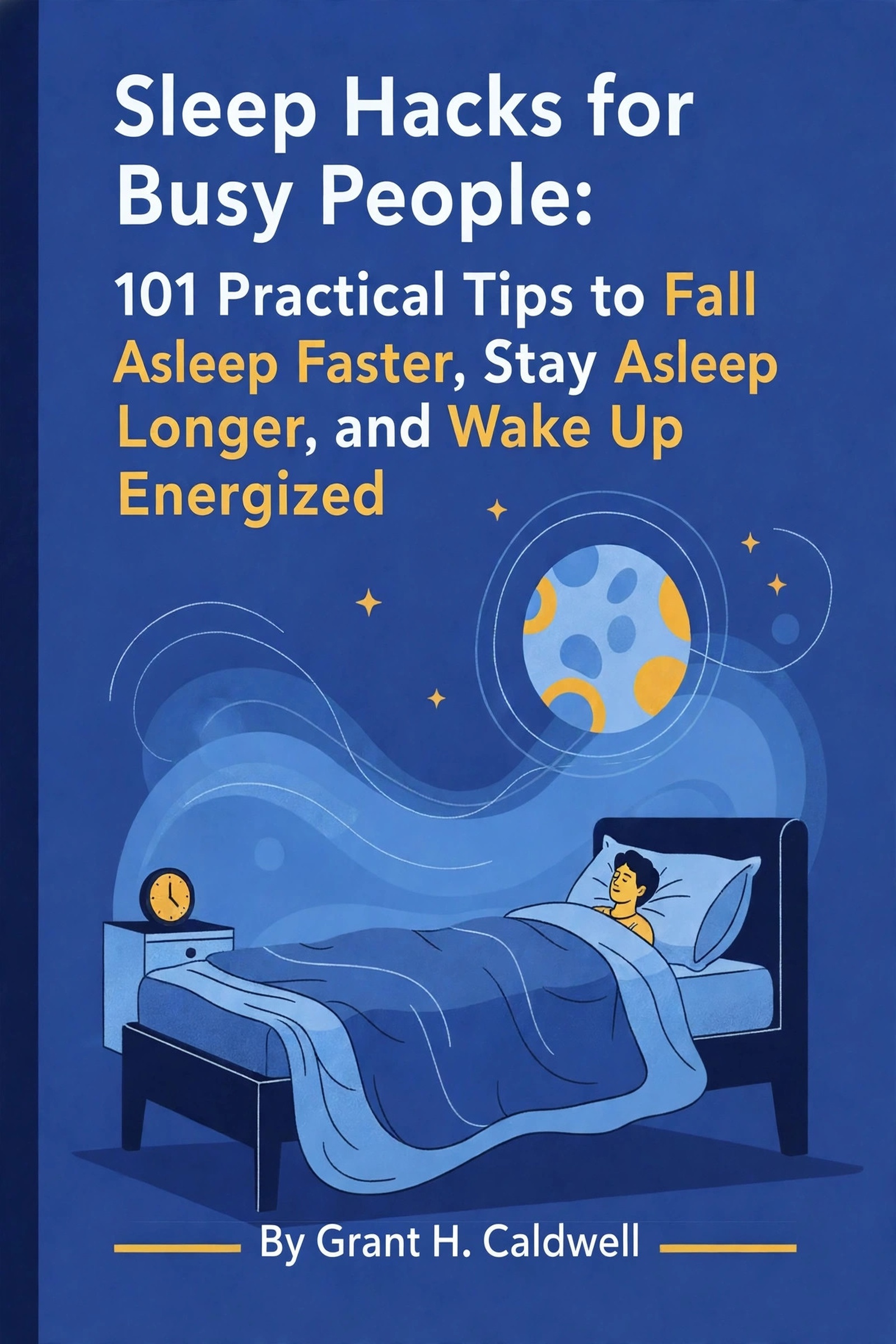
From Sleep Hacks for Busy People, Chapter 2:
2.1 Create a Clear Cue That Work Is Over
A small, repeatable signal can help separate work time from bedtime, even when your evenings are busy or unpredictable.
Choose a Transition Ritual
When your workday ends, give it a clear closing moment. Close your laptop, silence work notifications, and put away any papers or equipment you will not need again tonight. These small actions may seem ordinary, but repeating them in the same order creates a reliable boundary between work and personal time. You are not trying to switch off every thought instantly; you are simply showing yourself that work is no longer the evening’s main activity.
Keep the ritual brief enough to repeat on a demanding day. For example, take two minutes to review tomorrow’s calendar, write down your top priority, then shut your computer and turn off alerts. If you work remotely, physically putting your laptop in a drawer can make the boundary more visible. Try the same sequence for a week and notice whether it helps you feel less pulled back into work. A useful ritual is one that feels natural, not like another task to complete perfectly.
Change Your Setting
If you can, leave the place where you worked and spend the next part of the evening somewhere else. Moving from a desk to the kitchen, living room, or outdoors can help distinguish work time from personal time, especially if you work from home. You do not need a dramatic change. A short walk around the block, changing into comfortable clothes, or washing your face can provide a simple physical cue that the workday has ended.
When space is limited, create a small change within the same room. Close the work area, switch on a different lamp, or move to a chair that you do not use for work. The goal is not to make a particular room magically relaxing; it is to interrupt the pattern of staying at your desk until you head straight to bed. Choose a transition you can manage most evenings. Even a few minutes away from your screen can make the shift feel more deliberate and give your attention a chance to move on.
Set a Realistic Start Time
Choose a wind-down start time that fits the evenings you actually have. If your schedule usually allows only 30 minutes between finishing work and going to bed, do not build a routine that takes an hour. A modest plan you can follow most nights is more useful than an ideal plan that regularly falls apart. Start by identifying a reasonable bedtime, then allow enough time for a few calming steps before it.
Your start time does not have to be exact to the minute. Think of it as a reminder to begin shifting gears, rather than a deadline you have failed if a call runs late. You might set a recurring calendar reminder or use an evening alarm that signals it is time to close work and move into personal time. If your schedule changes from day to day, anchor the routine to an event, such as finishing dinner or shutting your laptop, instead of a fixed clock time. Adjust the plan after trying it for several nights.
Keep the Cue Flexible
Some evenings will not go according to plan. A late meeting, urgent request, or commute delay may leave little time for your usual routine. Rather than treating that as a reason to abandon the evening altogether, create a shorter version you can use when time is tight. This might mean closing your work apps, writing down tomorrow’s first task, changing clothes, and spending five quiet minutes away from your desk.
Keep the essentials simple and repeatable. You could choose one action that marks the end of work and one calming activity that helps you settle, such as gentle stretching, a warm shower, or reading a few pages. Skip anything that feels like a chore; the purpose is to make a small transition, not to complete every step in a perfect sequence. On an unusually late night, protect a reasonable opportunity for sleep rather than extending the routine just to make it complete. A flexible cue helps your habit survive real life.
This book provides general information for educational purposes and is not medical advice. If sleep problems persist, please consult a qualified healthcare professional.
Get Sleep Hacks on Google Play
The Sleep Hacks videos from the Grant H. Caldwell YouTube channel. The featured video rotates automatically — use the controls to browse all three.
Want an early copy of the next book in exchange for an honest review? Sign up through the form below. Reviews are never asked to be five stars — honest opinions only.